
Voice Of Valor: Military gave Wheeling resident purpose and motivation in life
Trending
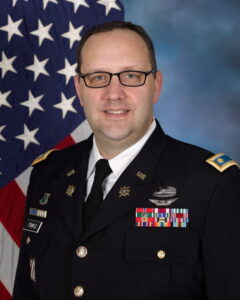
WHEELING - Wheeling resident Jim Temple enlisted in the Army at 17 years old as a way to make a life of his own.
"I volunteered in 1992 before I graduated from high school. I came from a suppressed family background. I needed to find a way to make my own way in life," he said.
The military helped him find purpose and gave him motivation.
"I joined at 17 and left for basic training after high school," said Temple, who is now 50 years old.
After serving as a combat medic, he decided to use military benefits, such as the GI Bill, to expand his opportunities.
"I knew I wanted to go to college. I found the Green to Gold program. I applied to get a scholarship for an undergraduate degree and earn a commission while on active duty as a second lieutenant and I was accepted," he said.
Temple then entered the Marshall University ROTC program.
In 2001, Temple was commissioned as an armor officer in tanks. He became a commander and platoon leader.
"It was quite an interesting experience. This was right before 9/11. When it happened I knew I was going to war," he said, referring to the Sept. 11, 2001 terrorist attacks in New York City, Washington, D.C., and Shanksville, Pa.
Temple deployed with the 3rd Infantry Division out of Fort Stewart, Ga., and became part of the initial invasion into Baghdad, Iraq, in 2003.
After serving more than a year in that position, he decided to switch to the intelligence field.
"I spent many years in the intelligence community, the DOD and Defense Intelligence Agency, the National Security Agency and working in diplomatic services," he said.
Temple also worked as a defense foreign liaison and department chief of intelligence plans for the Canadian Joint Operations Command.
Temple grew up in Maryland, but while attending Marshall University in West Virginia he fell in love with the Mountain State. After leaving his position at the NSA in Maryland, a job opportunity at West Liberty University - director of graduate studies - became available and he moved to Wheeling last June.
"I received lots of training and it was really about maximizing opportunities in the military. People don't realize the opportunities in the military. There are all sorts of benefits," he said. "I've made it a critical part of my job at West Liberty."
Temple said the most difficult part of his military service was serving in Iraq in 2003.
"I was sleeping on the back of a tank. The only hygiene was a bottle of water. There is no place to shower. You feel like there's dust and dirt on you all the time," he said. "Once you crossed into Iraq you had the threat of being killed."
Temple noted his training served him well in combat, where his actions and reactions became second nature. He said he received mental health counseling to deal with PTSD afterward.
"With PTSD it's important for veterans to realize that they might feel fine after an event. It's something they have to work through and deal with. What happens in the future, being in a crowd of people, a noise can trigger a veteran's PTSD. It's important to work through those issues when they occur," he said.
"I saw things over there and I see them here and it reminds me of those events. Thankfully, because of working through therapists, I can deal with and process those things."
Temple said one of the toughest battles involved crossing the Euphrates River to seize and control a bridge on the other side, which was held by Iraqi infantry.
"We were fighting dug-in positions and managed to hold the canal bridge. It was to allow infantry to cross to Baghdad. During the night after taking the bridge, we were counterattacked by the 10th Armored Medina Brigade of the Iraqi Republican Guard," he said. "Those were elite Iraqi forces with tanks and we fought off the counterattack that night."
He said there was heavy back-and-forth fighting throughout the night.
Before the battle began, Temple and his wingman had already been awake for 48 hours as they moved continuously to gain better positions.
As they prepared to rest in shifts, Temple's wingman spotted movement toward the tanks.
"Sure enough they were walking toward us. It looked like a bunch of farmers. They were pumping their fists in the air," he said. "As they were getting closer I noticed they weren't wearing sandals; they were wearing combat boots and more than likely were military.
"Then a truck came and started throwing equipment out to them. At that point I identified them as a threat and engaged," he said.
Temple said he also directed mortar and air support during the fight.
"There was tank-on-tank fire. It was hot, sweaty and loud," he said. "It was an all-night fight until early morning. Everything stopped at first light. It was a hard night. My troops fought hard. Everyone survived."
Another major operation involved taking Saddam International Airport, now Baghdad International Airport.
After Baghdad was secured, Temple's mission shifted to peacekeeping, and his tank was replaced with a Humvee-type vehicle.
He patrolled Route Irish, known as one of the most dangerous stretches of highway in Baghdad, where insurgents used IEDs to target vehicles.
Even today, he said, seeing a trash bag on the roadside reminds him of Iraq.
"They used to hide bombs in garbage bags," Temple said. "My team was attacked several times, but no one was really hurt at that time. In the early Iraq insurgency they were still developing tactics."
The patrols were difficult because it was hard to distinguish civilians from insurgents, he said.
"You don't know who to trust," he said.
Temple returned to intelligence operations and deployed to Iraq again in 2006.
"I was working with UAVs and drones, predators and hunters, armed recon," he said.
One mission involved targeting Abu Musab al-Zarqawi. Temple helped support UAV assets used to locate him before he was killed.
"Drones now are used as direct attack assets and for surveillance," he noted.
In addition to the Middle East, Temple served in Canada and Germany.
Looking back, he credits the military with giving him direction.
"I imagine I probably would not have amounted to much, to be honest. I really was struggling in high school and with my family," he said. "I was really struggling to figure out where I was going in life. I think it was the military that helped me find the direction I needed to go."
"The military isn't for everyone. If you have the right state of mind, try to be a team player, are somewhat of a patriot and want to apply yourself, you can excel and go very far," he said.
Temple retired as a major and served as a lieutenant colonel during his final year of active duty.