
‘There’s no real closure’: College seniors struggle with missing goodbye hugs and sendoffs
Trending
Graduating college is typically a proud moment for both the graduate and the family, but this year, for most college seniors, graduations have been postponed due to the COVID-19 pandemic. While students will still graduate, many say they will miss a sense of closure to their education without having the ability to walk across the stage.
For those who lived on campus this semester, the majority of students have been forced to move out of their student housing, with many returning home to live with family instead.
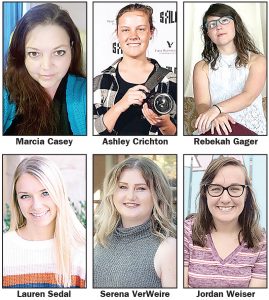
Rebekah Gager, a senior history and museum studies major at Texas A&M University, has been able to stay in her dorm. Her family lives in Ohio and she said between traveling and getting used to being home, she was concerned about her schoolwork and requested to stay on campus.
Gager said the majority of food options on campus, such as dining halls, have closed, but she can still go to chain restaurants on campus to use her meal plan. Gager's boyfriend is from New York and his family is trying their best to keep him at Texas A&M, as well.
"It's way worse," Gager said about her boyfriend's home state of New York. "It's weird when your parents are prioritizing your health over seeing you."
Jordan Weiser, a senior at Ohio Northern University, said everything started to feel real when her roommate returned from a spring break trip to Costa Rica.
"I saw her when we went back to school that Sunday," Weiser explained. "Then about mid-morning on that Monday, I got a text from her saying, 'Don't go in my room, don't go in the downstairs bathroom. We're getting quarantined for coronavirus.'
"So that was kind of scary for us," she added, "because I live with four other people and we lived in an off-campus house. It was kind of scary for us to all of a sudden be like, 'Oh, this thing that kind of didn't really seem like it was a big deal is all of a sudden in our house and in our life.'"
The university moved all classes online that same week.
That move forced students to adjust their daily routines. Gager said she's had to force herself to walk in the 20 minutes between classes because she's used to walking a few miles a day.
Such a change has also rattled those who returned home to finish their classes virtually. For Ohio Wesleyan senior Lauren Sedal, it hasn't been easy to juggle being home and finishing her classes.
She said some professors have increased the workload with online lectures and meetings -- both of which are difficult to handle after moving back in with her family. Sedal said she went away to college for a reason -- most importantly to be attending classes in person.
She said the pandemic and leaving college has been difficult to deal with. It seemed like every day brought a new change and she said it's hard to take her mind off the developments surrounding COVID-19's spread.
For Weiser, who moved back in with her parents, she is terrified of catching the virus and passing it along to her mother.
"I don't think I've been out in any public places or anything," Weiser said. "I take my dog on a walk every once in a while. My mom, she's the one that I'm mostly worried about because she's diabetic and she has some asthma problems. So my biggest concern the whole time has been, I don't want to get it because I don't want to give it to her."
Ohio University graduate student Serena VerWeire said she feels like everything is in limbo and she continues to struggle to find the motivation to figure out how to complete final group projects.
Something she and her professors are both struggling with is imagining what higher education looks like in August. Ohio University has already shut down one of its dining halls permanently and VerWeire, who is getting her master's degree in education in college student personnel, said many institutions are looking at an uncertain future.
During class, she and her classmates did a video chat with a vice president of student affairs at Cornell University, who said the school is looking at a $25 million deficit due to the pandemic. She worries about smaller colleges and universities that could go under as a result of COVID-19.
"Applying for jobs has been nonexistent," VerWeire said. "I can't be picky right now. There are no jobs out there and so many institutions are going on hiring freezes. It's defeating to realize you have all these qualifications and you might have to become a nanny."
Gager has similar fears. She planned to find work at a museum but most museums have closed due to the pandemic. She said she needs to find a job in the meantime, and she's been thinking of work at a grocery store because they are one of the few things open to the public.
Nontraditional students like Marcia Casey are giving up their long-awaited graduation moment. Casey, who attends a brand campus of Kent State University, said when she realized the ceremony would be postponed, she was disappointed. She then added that even though she will still graduate on time, she said she's struggling to balance work and school.
Casey works in the financial industry and is considered an essential worker. She said that her workload has increased because of the shutdown and she has been fielding more calls than she was before the pandemic. The workload, she noted, is starting to take time away from her schoolwork.
While Casey isn't looking for a new job, she is concerned about starting her master's degree program in August because she doesn't know if she will be attending classes in person -- or if she will be able to attend them at all if work doesn't slow down.
She said all she is hoping for in the future is normalcy.
Ashley Crichton, who is set to graduate from the Rochester Institute of Technology with a degree in advertising photography, said it's been difficult not having access to photography studios and lights.
"I am pretty good at being resourceful and figuring out how to keep doing assignments at home by making a studio in my room, but it is still tough because I had a lot of plans for shoots that I wanted to do to make the most of having access to all that gear," Crichton said. "I now will possibly not have the chance to experiment and do (certain things) ever again."
She also added that living across the country from the school she attended hasn't helped either.
"Another big way it has affected my schooling is that I am now at home in California, but all my classes are still on New York time," Crichton explained. "I have classes and meetings that start as early as 5 a.m., and it is difficult to get up and pay attention during them."
Crichton said if the school reschedules graduation, she still will not attend because it's too expensive to return to New York from California for the ceremony.