
EPA starting cleanup of Washington Co., Pa., toxic waste dump
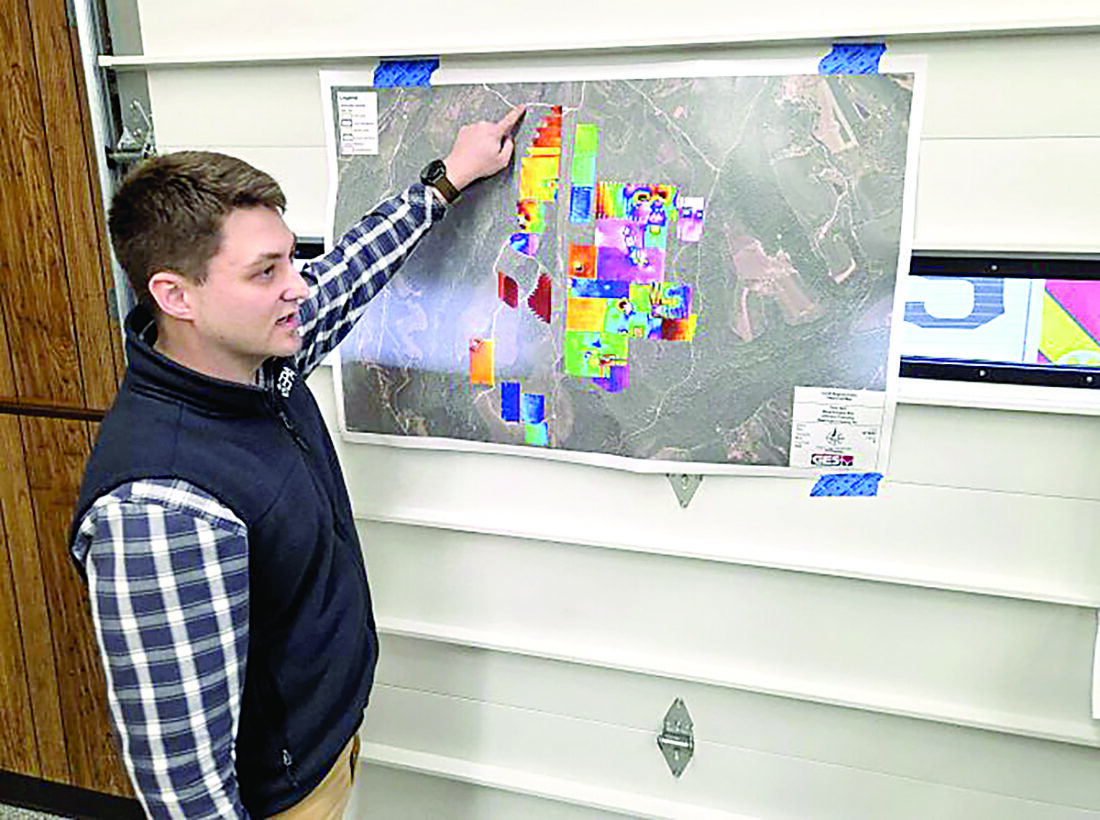
Mike Jones photo Kevin Clark, who is the EPA’s on-scene coordinator, updates residents during a meeting Thursday at the Eldersville Fire Hall about the agency’s plan to remove toxic waste barrels that were illegally dumped and buried at an abandoned strip mine in Jefferson Township in the late 1970s.
Nearly 50 years after it was discovered that an estimated 4,500 barrels filled with toxic waste were dumped and buried on a 650-acre strip mine in northwestern Washington County, federal environmental regulators are beginning to clean up the messy legacy left behind.
The U.S. Environmental Protection Agency is formulating a remediation plan at the defunct Bologna Coal Company’s former Scott Mine near Eldersville in which three targeted sites out of a possible 20 suspected dumping areas will be cleaned up over the next few months.
The 55-gallon drums, which contain a variety of toxic materials and were illegally dumped at the site for years by the Mays Corp. before it was halted in 1979, are scattered across the property and have likely deteriorated by now. The barrels contain many heavy metals and synthetic chemicals, some of which are cancer-causing carcinogens that are the byproducts from production at manufacturing plants once run by Koppers Inc. and U.S. Steel.
“There’s a lot of drums left behind,” said Kevin Clark, who is the EPA’s on-scene coordinator for the project. “There’s a lot of different chemicals. It was a little bit of a needle in a haystack and we’re finally getting to the point where we can target it.”
Clark spent about an hour Thursday night telling nearly 50 area residents who gathered at the Eldersville Fire Hall about the EPA’s plan and answered their questions about the scope of the project. Many in attendance expressed frustration about the length of time it’s taken for such work to begin, which Clark acknowledged has been an ongoing problem that began even before he was born.
“I understand this has been a long, open sore for the community,” Clark said. “As long as I’ve been involved, I’ve tried to push this forward as thoroughly as possible. … It should’ve been cleaned up as soon as it was identified. I think we can all agree on that.”
A criminal investigation ensued after the clandestine dumping operation by Mays, which was a waste disposal company, was discovered by authorities in 1979, although no charges were ever filed. The Pennsylvania Department of Environmental Resources – the precursor to the state’s Department of Environmental Protection – instead ordered Mays, Bologna Coal and the waste producers to clean up the mess. However, Mays filed for bankruptcy in 1982 after removing only 400 barrels, leaving the other 4,000 still buried underground.
Over the years, many studies have been conducted and testing has been performed on soil and nearby waterways, including Scott Run that bisects the former strip mine property. In 2022, the DEP referred the situation to the EPA, which performed an in-depth analysis on the property in 2024.
“We decided to take a closer look,” Clark said.
Scientists previously used a metal detector the size of a push mower to tediously search for the barrels on the rugged and wooded terrain, but new technology attached to aircraft allowed surveys to look below the surface for “buried metallic objects,” Clark said. That identified 20 possible locations where the drums are buried, which led the EPA to pinpoint half of them with “walkover” surveys, he said. Last year, the federal agency settled on three of those sites to excavate and remove an unknown number of barrels and properly dispose of them, while also testing nearby soil and waterways for possible contamination.
The three sites where the work will be performed are in Jefferson Township, although the property where the barrels were discarded straddles the state line between Pennsylvania and West Virginia. Clark said this particular project has a cost “ceiling” of $2 million that will come from federal “superfund” money, and it’s not known if or when more remediation projects at the site will follow.
Crews with excavators and dump trumps will dig as deep as 30 feet to search for the buried drums. Clark said they expect that depth to be sufficient since the strip mine followed the coal seam to that level, although he acknowledged some barrels could be even deeper.
“That’s a pretty big hole,” he said.
Additional on-site testing could require them to dig deeper, but Clark said barrels that are deeper are likely insulated in enough soil that there is no danger for chemicals to reach the surface or underground water tables. Crews plan to test the water supply for neighboring homes closest to the site.
“It’s not just finding the drums. It’s finding where they are and whether they can harm people,” Clark said. “Our goal is to get to these buried metal objects. As we dig, we’ll send soil samples out for testing to see if they’re impacted.”
Work is expected to begin in April and continue through the summer months. Clark said the EPA will release a report on its findings in about two years, while promising to keep residents updated with interim reports between now and then.
“We’ve been fighting wet weather and snow to get that road in there,” Clark said about how they are following an old logging trail to build a pathway for heavy machinery to get to the sites.
All of this work is occurring as there are plans to convert the abandoned strip mine site into a solar farm. St. Louis-based Cornerstone Solar LLC has filed an application with the township to build a 200-megawatt industrial solar farm, according to documents on the municipality’s website.
Clark said the permitting and approval process through Jefferson Township will not affect the barrel removal work, and he told the residents that the EPA is not involved in overseeing any portion of that solar farm project.
Jefferson Township municipal officials are holding a planning commission meeting at 7:30 p.m. Wednesday in which the solar farm is expected to be a topic, followed by a public hearing on the application at 6 p.m. Thursday. The solar farm’s conditional use permit application can be found on the township’s website at www.jeffersontwpwashpa.org.
Community

Russell Nesbitt Gets Uplifting Support From Local Church
EPA starting cleanup of Washington Co., Pa., toxic waste dump
Bible Bowl Comes to Wheeling
Community Briefs
School calendar meeting set WELLSBURG — The Brooke County Board of Education will hold a special meeting at ...
Community Briefs
Dinner helps Eagle Scout effort WINTERSVILLE — A local Scout is looking for funding help with her Eagle Scout ...
Community Briefs
Weirton budget workshop canceled The City of Weirton Budget Workshop scheduled for Thursday, March 5, at 6 p.m. ...