
ODOT gets ready for a harsh winter
Trending
WINTERSVILLE -- Don’t be fooled. The warmer-than-average temperatures in the Tri-State Area days mask the wintry weather on its way.
From falling leaves, turning the clocks back to the annual Halloween celebrations, signs show the seasons are nearing a change.
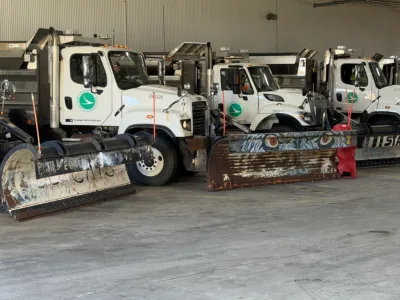
Another indicator came Thursday when the Ohio Department of Transportation held its annual winter readiness event at its Jefferson County garage on county Road 43.
“They are doing 150-point inspections, and our mechanics are looking at everything on the trucks, from over the engines to checking tires and windshield wipers and making sure all of the lights are working properly,” explained Lauren Borell, the public information officer for ODOT District 11. “It includes everything, major and minor, just to make sure these trucks are ready to hit the road when the snow flies.”
The district covers seven counties -- Jefferson, Harrison, Belmont, Carroll, Columbiana, Holmes and Tuscarawas. It’s a big area that includes a lot of roads ODOT crews are responsible for keeping open when bad weather hits -- 3,400 lane-miles, Borell explained. It covers all of the interstate, state and U.S. routes that are outside of municipalities.
That includes 461 miles in Jefferson County.
Keeping those roads plowed and treated is accomplished through 12 routes. There are 16 trucks at the garage, which means there are backups if needed.
Those trucks are washed after they are used and are parked indoors, something ODOT has been able to do since the facility opened in the summer of 2013. This helps extend the vehicle’s lives.
“Once we get into the winter months and the snow comes, we work 12-hour shifts around the clock, especially starting in January,” Borell explained. “With any winter event, we will roll into those shifts as needed, so we can give 24-7 care to the roads.”
Having to be ready for bad weather means ODOT officials need to keep a close watch on the weather forecasts. Technology including weather apps, has made this easier, but the region continues to present a set of challenges requiring plenty of communication throughout the district.
Jefferson County is a far eastern county, she said, which means as bad weather conditions pass through the counties to the west, garages will communicate about what is likely on its way.
“Each county is, of course, different, with different geography and everything,” Borell said. “You know, in Jefferson County, we see a lot of squalls, especially on routes like state Route 646. It’s very unique, especially with the river. Things can change rapidly.
“So, although you know what the western counties are seeing, we might not get he same thing here, or we might get more. It’s always interesting, but we have great technology and are looking at the radar,” she added.
While all aspects of the weather are important, Borell said one of the most critical segments to monitor is the temperature of the pavement.
“That’s a key thing, especially when it comes to our treatments,” she explained. “Pavement temperature helps to dictate a lot, from when we are pre-treating or if we need to adjust our salt usage. Each event is different, and we don’t have a set game plan of A, B and C of what we need to do. We do have a playbook that we can turn to and know from experience of how we can tackle these winter events.”
That can include choosing which product is best to treat the roads with.
“We still use traditional salt, and then we use the liquid brine,” Borell said. “Brine can help to break down snow on the roadway, especially when it is getting packed down. It seems a little counterintuitive that we are using liquids, but with the brine, we can break down that packing and loosen things up for them when they go to clear the roads.”
Brine also is used on bridges, because they always will freeze before the road. And, ODOT also will use Beet Heet, which is essentially beet juice, she added.
Borell reminded area residents they should be taking steps to make sure their vehicles are ready for the coming winter weather, as well.
“You should be looking at your tires and making sure the tread is good. That’s especially important in rural areas. You want to make sure you have traction in your vehicle. You want to check your windshield wipers and have fluid stocked up for the winter months and make sure your headlights are good to go,” she said.
“You can pack a blanket, a candle and some water, just in case something happens, and you would get stranded -- in rural areas we know that we don’t always have cellphone service, and in case you are stuck for a bit,” Borell added.
She also recommends those who have to travel should pay attention to the weather forecast and plan accordingly. Crews will be out when the weather is bad keeping the roads safe -- but it can sometimes be difficult, especially during periods of heavy snow.
Motorists also need to remember to give the truck drivers plenty of room to do their work.
“Our trucks don’t stop on a dime,” Borell said. “They are big, they are heavy and it’s really important to be giving yourself plenty of space between you and them -- don’t crowd the plow. They are out there to make the road safe for you, so help them do their job. Whenever our trucks are taken off the road, that’s time we are losing when roads should be cleared.”
Similar weather readiness events are planned for Monday in Harrison County and for Wednesday in Columbiana and Carroll counties.