
Communication bridges the gap between people and police
Trending
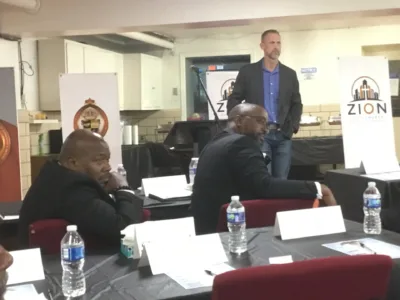
STEUBENVILLE -- Ensuring that paths for engagement are open among various segments of the community is important for continued growth, area leaders were reminded during Friday’s community engagement session at Zion City Church.
“Since this is a time of collaboration among the police department and the religious community in our town as a whole, I thought what better way of doing that than getting police chiefs involved with these events that include education themes, and getting the citizens involved as well,” Bishop Jermaine Moore, pastor of Zion, said after the two-hour session.
Featured speakers were from the Ohio Peace Officer Training Academy -- James Cyphers, the executive director, and the Rev. Eddie Tyes Parker III, the community engagement liaison. The two, who work under Ohio Attorney General Andy Wilson, covered a wide range of topics, from providing better training to making sure officers are involved with the people they serve.
“Events like this open dialogue,” Cyphers explained. “They are person-to-person, where we can have real conversation. You can only change the world one conversation, one positive person at a time. Here, we got to have 20 or 30 positive interactions, and those people will have five, 15 or 20 more. It might change someone’s perspective.”
There were a wide range of representatives from the community at the session -- city officials from Steubenville, area clergy, officials from UPMC Trinity, social workers and people involved with housing. Among those attending was Mingo Junction Police Chief Willie McKenzie.
“It just shows us building a bridge with the attorney general’s office and allowing us to be able to discuss and talk about things and get some understanding and clarity is important,” he said. “It allows law enforcement and the community to be on one page and understand what law enforcement is and to be able to build together and have a better understanding.”
Keeping dialogue open and a willingness to be open to accepting criticism -- from within the police departments and the community --is crucial to help build a sense of understanding was the consensus.
“I was really pleased I had the chance to come,” said Steubenville’s 4th Ward Councilman Royal Mayo. “It was refreshing and eye-opening about the direction training is going. I appreciate what was said and what I have always believed was that it has to be a collaboration between the citizens and law enforcement.
“Nobody is always right,” he continued. “Law enforcement just can’t defend law enforcement, and the neighborhood just can’t defend the neighborhood. We have to defend right and wrong. If a person in the neighborhood is wrong, we have to say that. If a police officer is wrong, we have to say that -- it has to be coming from that group as well. It can’t be one way. I think this training will lead to that.”
There are about 33,000 law enforcement officers in the state, Cyphers said. They are spread among the 929 municipalities and 88 counties. Those numbers show the challenges faced in preparing officers for work in the community, and why bringing people together to hear different perspectives is important.
“These events are not just important -- they are crucial,” Parker said after the meeting. “Neither the lion nor the lamb wants the forest to burn, and unless all of us collaborate together, none of us will be safe. The community needs to be safe, and law enforcement is a part of the community. There’s no divide where there’s law enforcement and the community -- we are all the community. When we sit down and talk together, it increases the safety of everyone involved.”
Steubenville Police Chief Wes Crawford and Mayor Ralph Petrella said that having the chance to bring a diverse cross section of the community to meet and talk among themselves can open doors -- and keep them open.
“I think it helps just by bringing people together, people who wouldn’t normally get the chance to talk with a police officer in this setting ,” Crawford said. “People had the chance to learn a little bit about that today and learn about the way we train and the vision of the future of training.
“As a police force, we depend on community involvement for many issues, not just crime,” he added. “We need their support in everything we do. Meetings like this with church leaders are very important, because they have a lot of reach and a lot of contact with the community.”
Petrella explained that being receptive to what all members of all parts of the community have to say will make it easier to work together.
“This event is extremely important because it bridges the gap of the city administration and the individuals who train our officers at the highest level,” the mayor said. “For us to be able to get feedback when we see and hear what they are changing is so vital. Especially with the climate toward police officers now. We have to have the understanding and the emotional intelligence of what our citizens are going through as officers to better serve them.
Petrella was impressed with the turnout and the number of areas that were represented.
“This type of collaboration among other agencies and other areas is going to be huge, because we are going to be able to rely on our church members and pastors to help change the culture within our citizens. That way, they will be able to understand what our police are doing, and they will be able to help communicate with our youth.”
There also will be breakdowns in the way some people perceive police officers and the way police officers perceive some people, Parker said. He added that clergy and others involved in religion have the power to help change that.
“We’ll ever fully be able to bridge that gap, but what faith leaders who are here can do in their churches is to validate law enforcement,” he said. “This is how we do it, here’s the gap I find. I ask how many of you have officers in your church or are training to be members to be officers. This week, I am sending two -- one will be going to Baltimore and one will be going to Columbus to the police academy. We say to our youth that this is a good profession, this is what you should go into. It’s one thing for a community to say I don’t have an officer who looks like me or a police chief who looks like me, and it’s another thing for me to ask that pastor if they are training the young people. It’s one thing to complain about a president -- I’m going to ask which one can run.”
For Beth Rupert Warren, coordinator of the Jefferson County Resource Network, gathering people together to work on solving issues makes a difference.
“Any time people can come together and put faces and names together and foster positive relationships is important,” she said. “I think it’s good to be able to bring people together and see there can be unity and diversity.”