
TANF Tug of War: Lawmakers reject Morrisey’s crisis claims
Trending
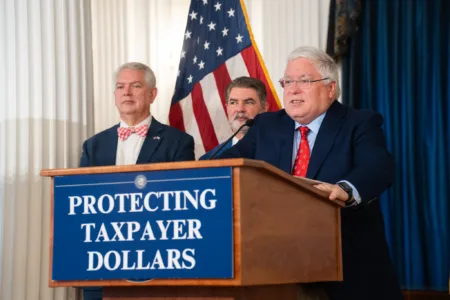
CHARLESTON -- Gov. Patrick Morrisey continues to argue that West Virginia’s Temporary Assistance for Needy Families program faces an unsustainable structural deficit, even as lawmakers question why services are being reduced while funding remains available.
Morrisey said the program, also known as WV WORKS, is projected to face a structural deficit of more than $40 million because the state expanded spending with one-time federal COVID-19 relief funds. He said the program has about 18 months of financial stability before the deficit becomes a crisis.
The Legislature approved $177.1 million for TANF in the fiscal 2027 budget, roughly the same as the previous year and about $42 million more than in fiscal 2025.
TANF is a federal block grant that provides cash assistance to low-income families and supports programs including school clothing vouchers, family resource centers, child care subsidies and workforce assistance. According to the state Department of Human Services, more than 4,200 West Virginia families were receiving TANF benefits at the end of 2025.
While West Virginia had more than $83 million in unobligated TANF funds at the end of the last federal fiscal year, Morrisey said those carryover dollars only mask the underlying deficit.
“You have to find a way to get back down to the pre-COVID spending,” Morrisey said. “If you continue spending above the recurring federal allotment, eventually the money runs out.”
The administration drew criticism after delaying this year’s school clothing voucher program, which provides $200 per eligible child to help families purchase back-to-school clothing and supplies. Nonprofit groups and parents said the delay created uncertainty just weeks before students return to classrooms.
The Department of Human Services later announced applications will open July 20, saying the program had been paused because of uncertainty over federal TANF funding.
House Finance Committee Chairman Vernon Criss, R-Wood, said lawmakers funded TANF at the level requested by the Morrisey administration and questioned the need for cuts.
“If he had needed more…we would have taken it under consideration,” Criss said.
Criss also noted the administration has broad authority to shift TANF dollars among eligible programs, arguing those decisions rest with the executive branch rather than the Legislature.
Democratic lawmakers also criticized the administration, pointing to the state’s recently announced $370 million year-end budget surplus and arguing services approved by lawmakers should not be interrupted.
The debate also has raised concerns about the future of other TANF-supported programs, including the state’s child care assistance program, which helps working families pay for child care. State officials have previously warned that child care subsidies also rely heavily on TANF carryover funds.
Morrisey said he is working with legislative leaders on a long-term solution and has not ruled out a special session to address the issue. Legislative leaders, however, indicated any request for additional funding would likely be considered when lawmakers return for the regular session in January unless circumstances change.