
Expanded crisis care remains priority for prevention board
Trending
STEUBENVILLE -- While many area residents might not realize it, behavioral health can have a substantial effect on the region.
“People often think of health care as a small part of the community. But behavioral health care is health care, and the economic impact these types of facilities have on our community should not be understated,” Bill Holt explained Tuesday afternoon.
“These are good-paying jobs,” he added. “They are stable and they come with benefits and they are, from an economic standpoint, a huge benefit to the community. If you look at the numbers, licensed behavioral health care workers who live in Jefferson County total about 1,000. It’s a huge part of the local economy.”
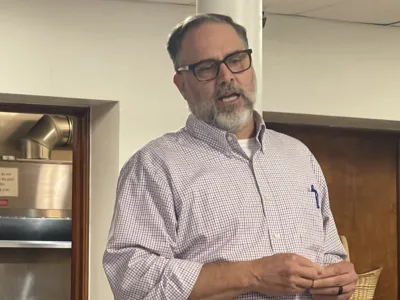
Holt, who has been the executive director of the Jefferson County Prevention and Recovery Board for about six years, was speaking during Tuesday’s meeting of the Steubenville Kiwanis Club. He told the members who had gathered at the Sycamore Youth Center that having access to crisis services for behavioral health is critical.
“It’s a topic that, when I’m out in the community talking to first responders, police, EMS and other members of the community, seems to always come up,” Holt said. “It’s an extremely important service that the board funds and works very hard to improve. Unfortunately, it’s just not always as good as we would like it to be.”
The board’s mission is to fund, plan and coordinate mental health services, substance abuse disorder services and prevention services across the county. Holt said the agency faces many challenges but is working to overcome them.
One of the things that is helping in that battle is the 988 service, which has been available on a national level for about four years, Holt said. He added that progress with the service has not happened as quickly as anyone would like but pointed to the 911 system, saying that it took about 20 years after that system was launched 60 years ago for it to be available to half of the residents of the United States, and another 20 years before it was built into the system we know today.
Having access to 988 can make a big difference.
“If you encounter a situation, and I hear people say this all the time -- I’m a behavioral health professional, and I encounter it sometimes -- where you have a loved one or somebody you know say something like, ‘I just don’t know if I can do it anymore,’ or ‘I feel like I’m ready to give up’ and that feeling of hopelessness, and you’re just not sure. And it’s easy to say, I don’t know? Is this person just having a bad day, or is this something more serious,” Holt said.
“That is where the beauty of 988 comes in, because you can call the number anywhere, at any time,” he added. “You can text the number if you have a question and get connected with the professionals and we can walk you through what the steps are. So if you or a loved one is having a mental health crisis, and you’re not sure what to do, 988 is where you start. And it’s a really great resource.”
It is not meant to be a replacement for 911, he added.
“911 will still work, and 911 is obviously a fabulous service that you can count on, but 988 is another tool in the toolbox, and it’s an easy number to remember,” Holt added. “In Jefferson County, if you call 988, and let’s say it is a young person that you know, and they are having a behavioral health crisis, and you’re not sure what to do, 988 will route you to the mobile response and stabilization services that serve kids in Jefferson County.”
Services come from a regional provider that contracts with Coleman Health Services to provide that service, he said.
It’s part of an initiative to ensure that every county in Ohio has access to mobile response and stabilization services for kids, which has been a priority of Gov. Mike DeWine. It’s not a perfect service -- sometimes the response can be slow because of staffing issues.
“However, because they have regionalized it, if you do call, somebody will eventually be able to get there from somewhere around our surrounding area,” Holt said.
Adults who find themselves in a mental health crisis are not as fortunate, Holt added. He said an attempt to establish a crisis unit in 2020 fell apart because of the COVID-19 pandemic and the decision of a community partner to change lease terms on the board at the last minute after the board had received some help from the state.
Holt explained that the board continues to move forward with providing expanded services, and that includes the remodeling of the Gill House at the corner of Sixth Street and Madison Avenue in the city’s North End. That project, which has received almost $900,000 in state money, will allow the board to build out infrastructure that will help it provide crisis services.
“One of the services that we’re really hoping to be able to provide in the near future, when the construction is complete, is what’s called a 23-hour chair,” Holt added. “If somebody stays for 24 hours, it’s considered residential, but with 23 hours, somebody can just come, sit and get through their crisis and, if they improve, can go on their way. If they don’t improve, they find someplace for them. So, we’re very excited about that.”
If a person still needed help after those 23 hours, they likely would be sent to the inpatient mental health unit at Trinity Medical Center East, a building, Holt said, that needs some updates.
Holt, who said he had worked in mental health services at UPMC, added the Pittsburgh-based health system’s purchase of Trinity Health System from CommonSpirit Health could be good for the area. The deal is expected to be finalized by the fall.
“They deliver a huge amount of behavioral health services,” he said. “UPMC Western Psychiatric Hospital services are internationally known, and it is located on their campus in Pittsburgh. They are fully integrated in behavioral health, from outpatient to the highest levels of care. What they will bring to our community is a big question mark, but my personal feeling is it’s going to be great for us.”