
Visitors asked to leave Hellbender Preserve with memories, not plants
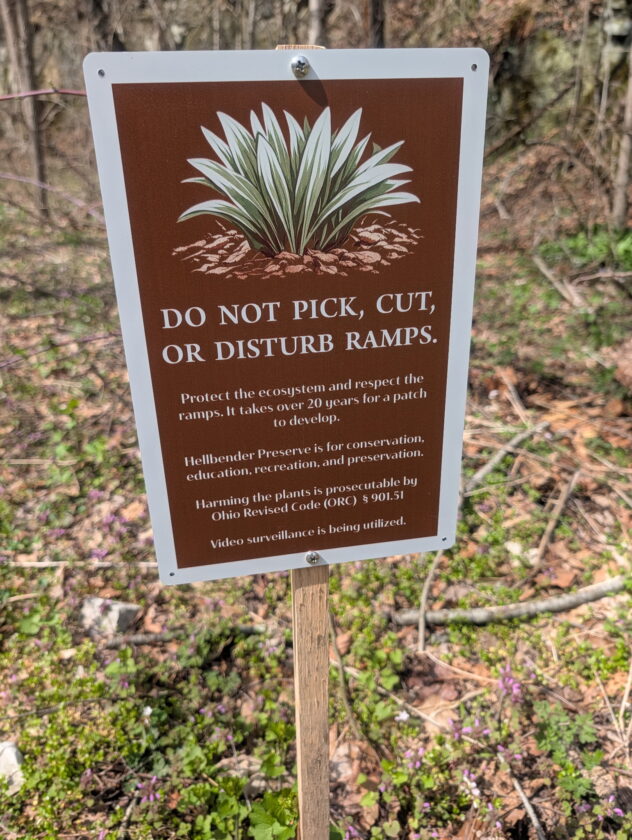
Contributed RAMPS – Stealing ramps from Ohio’s deciduous forests is prosecutable, but that’s not stopping visitors at Hellbender Preserve from filling their pockets with the edible, pungent onions prized for their “bold, garlicky flavor.”
BLOOMINGDALE — Planning on a nature walk at Hellbender Preserve? Jefferson Soil & Water Conservation District is asking visitors to leave their Allium tricoccum — better known as “ramps” — behind when they leave.
Ramps are edible, pungent onions native to Ohio’s deciduous forests. Known for their “bold, garlicky flavor with oniony sweetness,” they’re considered a delicacy and prized by chefs of all skill levels.
“They’re used for cooking and eating, like extremely strong onions,” JSWCD’s Aaron Dodds said. “A patch the size of a coffee can is considered large.”
Despite signs pleading with visitors to “protect the ecosystem and respect the ramps,” Dodds said they’ve had “several areas completely pulled out this year.”
“Hellbender Preserve is for conservation, education, recreation and preservation — and under the Ohio Revised Code, harming the plants there is a prosecutable offense,” he said, adding they’re using video surveillance to identify the ramp thieves.
“Ramps are a vital sign of healthy Appalachian forests,” he said. “As one of the first plants to emerge each year, ramps take advantage of sunlight before the tree canopy fills in, helping drive early-season nutrient cycling and supporting pollinators awakening from hibernation and wildlife when few other food sources exist. Their presence signals rich, undisturbed soils and a thriving woodland ecosystem.”
But they have a “hidden vulnerability,” he said.
“They grow slowly, often taking five to seven years to mature,” Dodds said. “When the entire plant is pulled for harvest, it cannot regenerate. Over time, this practice can wipe out entire patches. That’s why sustainable harvesting matters. Instead of digging bulbs, responsible foragers should cut a single leaf from a plant or take only a small portion of a patch, allowing the plant to continue growing and reproducing.”
He said ramps are “becoming increasingly scarce due to overharvesting and habitat pressure.” While it takes seven years for one plant to mature, Dodds said it takes 20 years for them to form a group.
“What was once common is now a reminder of how quickly a resource can decline when demand outpaces stewardship,” Dodds said. “Areas such as the preserves of Jefferson County managed by Jefferson Soil & Water Conservation District play a critical role in reversing this trend. The preserves — that includes Hellbender Preserve in Bloomingdale — offer a refuge where ramps can grow undisturbed, populations can recover, and visitors can experience them without harm.”
But “experiencing them without harm” is not what’s been happening at Hellbender, he said: Visitors are literally picking the ground bare, jeopardizing fragile native plant populations.
Because they’re so highly sought after, “whole populations can be wiped out quickly,” he said.
“Ramps are unique in that they make us rethink our relationship with the land: not just what we take, but what we choose to leave behind,” he said. “So please enjoy the property and leave only with memories and photos.”
Local News

Weirton ready to begin street paving season

Weirton man facing several charges after police pursuit
Visitors asked to leave Hellbender Preserve with memories, not plants

Auction anchors OVHC gala fundraiser
Former East Springfield firefighters convicted of stealing nearly $30K from department
STEUBENVILLE — Former East Springfield firefighters John Andrew-Scott Dunkle, 50, and Steve Brian Harris, 52, ...