
Ohio River is filled with snow and ice
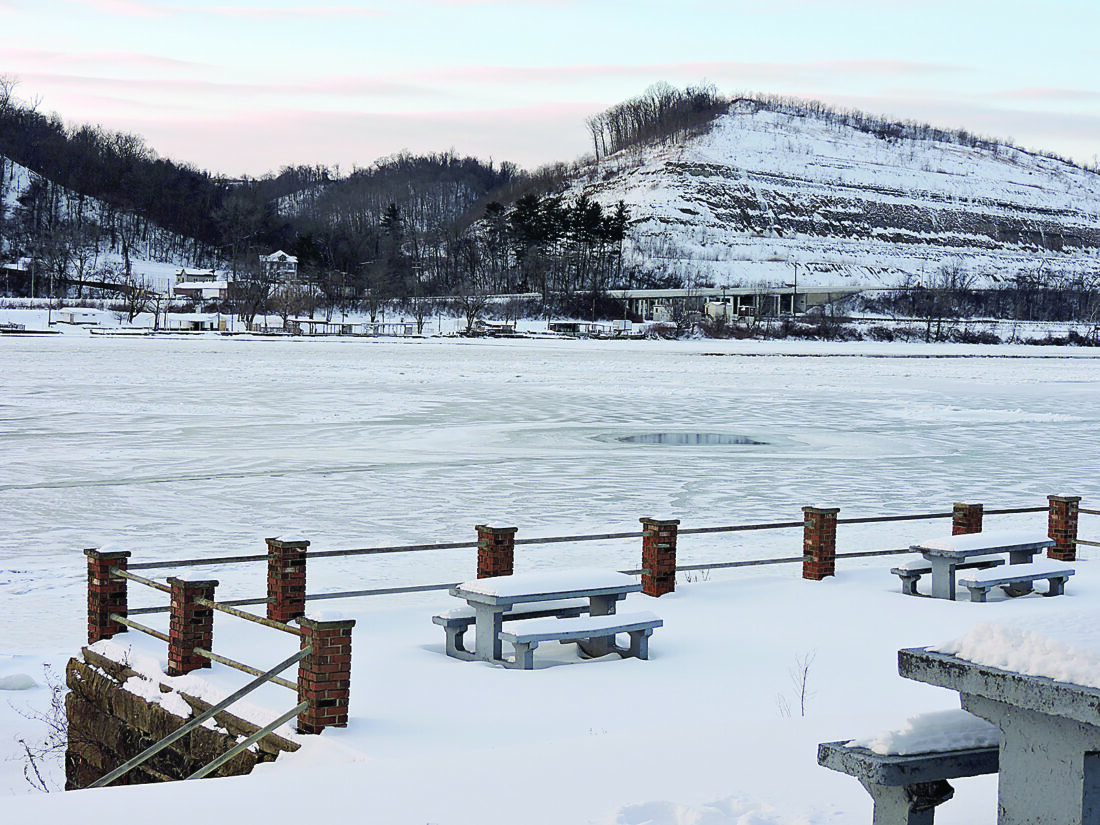
Warren Scott FROZEN RIVER — Heavy snow and ice have slowed the water of the Ohio River, but the continued spell of frigid temperatures will prevent flooding at this time, meteorologists say.
Many living near the Ohio River and those driving along state Route 7 in Ohio and state Route 2 in West Virginia have noticed the heavy snow and ice that have settled on its surface, bringing its flow to a crawl at best.
It might also have spurred concerns about future flooding, with the risk of ice chunks blocking the artery.
But that won’t occur while the current spate of frigid temperatures endures, officials explained.
Ray Davis, a senior hydrologist with the National Weather Service’s River Forecast Center in Cincinnati, said the region will need to experience several days above freezing for any major thawing to occur, and that’s not in the agency’s current projections.
The center is one of 13 across the U.S. that keep an eye on developing weather systems affecting rivers and other waterways.
Davis said freezing temperatures are expected to continue for at least the next two weeks.
The National Weather Service has predicted the Tri-State Area will experience highs at or near 15 degrees, with a wind chill factor of 9 degrees below 0 this weekend, followed by highs in the upper 20s for the remainder of the week.
While the current cold spell has many longing for summer weather, Davis said it would be better to have “a nice gentle warming trend to melt things more slowly.”
He said it would be best if the region doesn’t receive heavy and continuous rain, which would support flooding.
“That would not be good,” said Davis.
Asked how much water can be produced by melted snow, Davis said that depends on its density.
He said the several inches of the fluffier variety that fell across the region in recent days usually amounts to 1 to 2 inches of water.
Asked how deep the Ohio River may freeze, he said it could be from several inches to a foot, depending on various factors.
But he said because of its width, “It’s hard for the river to freeze all the way across.”
According to the Ohio River Valley Water Sanitation Commission, the river is about a half-mile wide between Pittsburgh and Wheeling and about a mile across at its widest point near Smithland, Ky., with an average depth of 24 feet.
Davis recalled that in 1977, the Ohio River froze to the point that people were able to walk across it.
But that was following days of single digit temperatures, and he cautions anyone from attempting that today.
Davis said many dams regulating the river at the time were designed for more shallow water and have been replaced with high-lift dams with at least a 12-foot pool behind them.
He noted ice chunks on the river can hinder commercial traffic, such as barges bound for local industries.
On Thursday, the Willow Island Locks and Dam near Huntington, W.Va., was closed because ice was blocking mechanisms in its gates.
And, the Coast Guard has restricted traffic on the Allegheny River in Pittsburgh because of dangers posed by ice buildup there.
Davis said it’s not unusual for businesses transporting materials and goods on the river to contact the agency or the Army Corps of Engineers about conditions affecting its use.
“We’re often in communication with each other,” he said.
Local News
Blast at Smith Township plant injures 5
Weather not hampering innovation center project in Mingo Junction
MINGO JUNCTION — The blast of winter that has hit our area has not hampered construction at the Jefferson ...

Bill meddling in city elections stalls following pushback
Bald eagle population thriving across Ohio
As the United States prepares to celebrate its 250th anniversary, the population of the national bird, the bald ...
Ohio River is filled with snow and ice
Marines reply to Catholic Central students
STEUBENVILLE — It began simply enough inside an eighth-grade English class at Steubenville Catholic Central High ...