Mingo Junction Police Department attending to evidence room
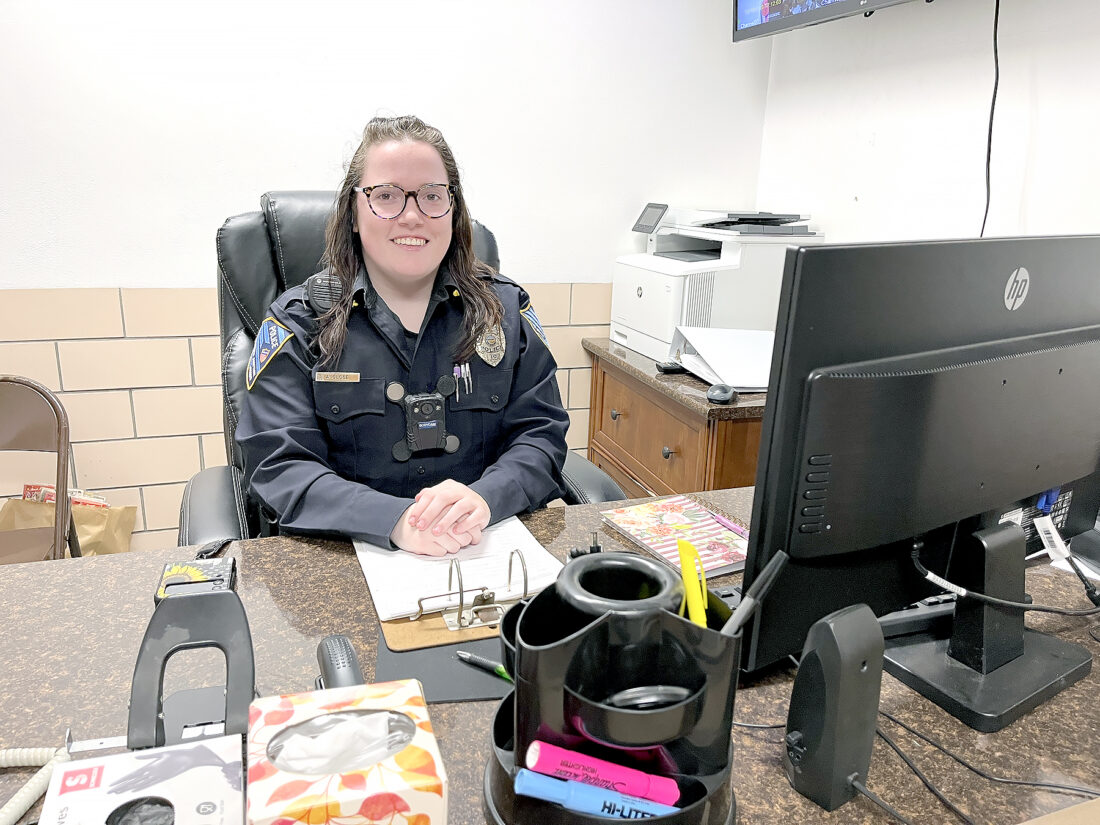
MINGO JUNCTION — With a new evidence room officer being certified near the end of 2023, the Mingo Junction Police Department is working to get its downstairs evidence room straightened out.
Patrol Officer Ashley Close is heading up organizational efforts for the department’s evidence room, which Chief Willie McKenzie III said is “in need of attention.” The department’s last evidence officer departed in 2022, warranting the recent endeavor.
Certified for her role in September by the International Association for Property and Evidence Inc. after a two-day class at the Stark County Sheriff’s Department in Canton, Close already has made progress in the evidence room. Close has been working to ensure evidence is accurately categorized and labeled, stored in correct boxes and envelopes and handled properly for use in court or for its destruction.
Close took the class at McKenzie’s request, part of the department’s ongoing training efforts. Having always had a knack for organizing, Close said, “I thought I could make a big difference down there.”
Once finished, the organized evidence room will consist of an office and spaces for the evidence itself, monitored by surveillance cameras. Comprising one-third of the department’s employees, Close works on organizing the room during free moments of her shift, and she hopes to ramp up her efforts as calls slow down in the winter months.
McKenzie said that the evidence room organization project, set for completion by the end of February, will help the department “to be more organized each and every day,” adding, “We strive to be the best we can and provide the best services.”
The role of the evidence room, Close said, is to have “evidence from open cases stored in one place” so that different materials can be efficiently sent out to the court system or to Ohio’s Bureau of Criminal Investigations for testing.
Materials that can be presented for use as evidence include alcohol, drugs, DNA evidence, U.S. currency and firearms, and each one must be handled in a specific way.
Once a case is closed, evidence can be destroyed in a proper fashion, Close said, an example being the incineration of confiscated drugs. In general, Close said, more evidence could potentially pop up later regarding a closed case, but the department — limited by storage space — should still dispose of the closed-case evidence because, “We can’t always rely on ‘What if?'”
Confiscated currency is logged as evidence and deposited in an evidence-based bank account into which all confiscated money is deposited, though different amounts and the situations surrounding them are kept on record by the department.
McKenzie said that “dependent on the disposition of a case, the judge may or may not grant that the money is seized and turned over to department.” If turned over, the department will note what the specific amount of money in the bank account that it has available for its own use. Through the court system, the department was recently given confiscated currency from a closed case, involving a November drug bust along state Route 7.
For firearms, Close said, the department can issue a request to the court system, asking that a firearm be forfeited to the department. The department can keep it on hand for training purposes or as a backup in case another firearm becomes inoperable.
Before a firearm is forfeited, it must undergo a check through the National Crime Information Center criminal justice database to take its background into account in the decision. A broken firearm, however, must be destroyed by smelting, shredding or crushing.
Local News

Orr to deliver Bethany College commencement address

Michael Rulli easily gains GOP nomination for U.S. House in Ohio
Steubenville levies renewed for 5 more years

DeFelice wins republican primary for Belmont County Commissioner
Kevin Flanagan wins republican primary Belmont Co. Common Pleas Judge
MARTINS FERRY — Belmont County Prosecutor Kevin Flanagan of Bellaire defeated Michael P. McCormick of Bethesda in ...