
Mingo Junction Police Department officials reflect on drug busts, problem at large
Trending
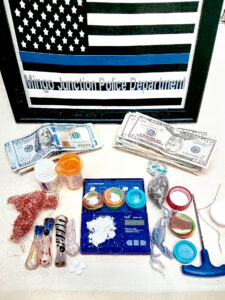
MINGO JUNCTION -- Chief Willie McKenzie III of the Mingo Junction Police Department conducted a traffic stop along state Route 7 in the village on Nov. 23 involving an individual allegedly driving while under suspension. That stop led to the seizure of suspected crack cocaine and U.S. currency, as well as the arrest of two individuals in connection with pending drug possession charges.
About one month prior, on Oct. 6, McKenzie and the department had assisted the Jefferson County Drug Task Force in executing a search warrant in the village, during which an individual was arrested and suspected cocaine, fentanyl and Percocet tablets were seized, along with a stolen firearm and currency.
Less than a week earlier, the task force executed a warrant and arrested an individual for the second time in four months while he was out on bond after an indictment in August on charges of possessing fentanyl, cocaine and methamphetamine. The individual was arrested in the same residence where detectives seized 100 suspected fentanyl pills, among other items.
Mingo Junction is among Ohio Valley communities gripped by the drug epidemic, squeezing the life out of Rust Belt areas. Principal is the increase in opioid-related overdoses and deaths, which caused 220 deaths each day in the U.S. in 2021, according to the Centers for Disease Control and Prevention.
Based on the three high-profile drug bust cases within a span of six months, McKenzie says the steel mill town of Mingo Junction is just as much affected by the sweeping drug problem as other areas of the country.
"People think, because this is a small town, they can set up shop and get away with (drug trafficking)," McKenzie said on Monday.
Possession of drugs can be between a first-degree misdemeanor and first-degree felony, depending on the total weight of the substance. The latter carries with it up to $20,000 in fines and prison time between three years and 11 years. Bulk amounts of certain substances, as defined by Ohio Revised Code, justify a major drug offender specification, which brings a mandatory 11-year minimum prison term.
McKenzie said drug busts themselves are searches by warrant, issued by a judge, of an occupancy, and investigation necessary to get those warrants is time-consuming. On the other hand, police on a traffic stop without a warrant can search a vehicle provided an officer has probable cause to do so.
Probable cause is the reasonable belief an officer may have to think a crime is being committed. McKenzie said an example would be if an individual inside the vehicle admitted to having drugs in the car, the officer would have probable cause to believe the claim to be true and therefore conduct a search.
"Sometimes, from past experience, you can tell on someone's face when they may be hiding something or don't want you to find out," McKenzie said, adding that simply asking questions may lead the person to an admission.
With probable cause, individuals may be arrested without a warrant until charges are filed. The individual will be arraigned in county court, where he or she can make a plea of guilty, not guilty or no contest, meaning he or she admits the facts of the case to be true but does not admit guilt.
A not guilty plea on felony drug possession charges will lead to further court sessions, even being directed to the Jefferson County Grand Jury.
McKenzie said drug traffickers from Steubenville and other cities have used Mingo Junction as a hideout from where to do their business, primarily with fentanyl, cocaine and heroin. Village residents being sold to are affected, leading to about 20 overdose responses by the village police department this year, according to McKenzie.
Now is the worst McKenzie has seen the drug problem during his time with the department, he said, but recent efforts by the drug task force have been foiling that trend.
"Now (drug traffickers') eyes are opening up to see we're not going to have that here. Mingo won't be your low-key spot to come and sell drugs out of. Our town is not a drug town."
Capt. John Lemal of the Steubenville Police Department, commander of the task force, said the drug problem is not unique to Mingo Junction. It is an issue in all of Jefferson County and abroad, perhaps fueled in the Rust Belt by stagnant economic opportunity, which leads to discouragement.
"They have a problem (in Mingo), but we all have a problem," Lemal said, adding that the widespread hiring difficulties experienced by police departments may contribute to the drug problem, as traffickers gravitate toward areas they believe will put up less resistance.
Lemal credits a decrease in overdose deaths in the county -- from a rising peak of 40 in 2022 to 17 so far this year, according to statistics from the Jefferson County General Health District -- in part to the swiftness of first responders and Ohio's encouragement for individuals to carry naloxone. Another factor is the task force's increased cooperation with social services.
The task force was formed in 2008 and is comprised of members of the Jefferson County Sheriff's Department, the Steubenville Police Department and county prosecutor's office. Lemal said being able to work closely with local police departments allows for successful operations, and the recent drug busts in Mingo Junction are proof.
McKenzie said Lemal "keeps close contact with me and always makes sure I'm aware of things that they will be looking at or conducting here in Mingo. With him, nothing's in the dark. He's always very transparent."
Apart from the task force, McKenzie said, part of fighting the drug issue comes from more patrols, speaking with citizens and working to address problems as quickly as possible when they appear. Most important is building a good reputation with citizens so they feel comfortable about sharing information, he said.
"If you don't have good rapport with your citizens, you don't have anything. ... It's not police versus the community. It's police and community. We have to stand together."