
Marine veteran shares PTSD advice
Trending
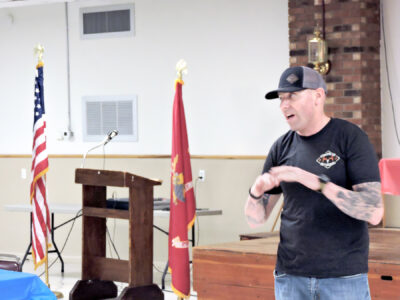
TORONTO -- Marine Corps Sgt. Major Daniel Krause said people respond to post-traumatic stress in various ways but unfortunately, a common one is to keep it inside.
"You put it in your little black box and shut it up and after a while, it just eats away at you. You can push it down long enough, but eventually you're going to have to face it," Krause told members of Toronto American Legion Post 86 on Saturday.
The 30-year military veteran offered advice for dealing with post-traumatic stress disorder, noting it's not limited to those who have served in the armed forces and may occur with emergency first responders and others.
Post-traumatic stress disorder defined by the Mayo Clinic as a mental health condition caused by experiencing or witnessing a terrifying event.
According to the Mayo Clinic, PTSD can cause people to experience flashbacks, nightmares and severe anxiety, with a common symptom the inability to put the traumatic event out of one's thoughts.
Krause said PTSD also can affect people in positions of authority.
"When you're a leader responsible for people and something happens to those people, that gets to you," he said, adding, "You start second-guessing yourself, asking if there's something you could have done differently."
Krause experienced great physical and emotional trauma when he was struck by shrapnel in multiple areas of his body while serving in Afghanistan on July 2, 2010 and underwent extensive surgery over several months.
But it was scars of a psychological nature that he wanted to talk about on Saturday.
Krause said those dealing with PTSD must find someone to talk to and when that person is a fellow veteran, they often will find they are not alone.
He recalled being part of a group of veterans who spoke about many things, including the disturbing things they experienced in the line of duty.
Krause said a member of the group seldom spoke until one day, when he told the others, "I thought I was crazy until I heard you guys."
He said another way of dealing with PTSD is to find an activity that takes one's mind away from their stress.
"It can be everything from leatherworking to exercise," he said.
Before arriving at the post, Krause was one in a group of hunters taking part in the first Sgt. Nathaniel S. Rock Memorial Whitetail Hunt.
A Toronto native, Rock was serving in the Marines in Iraq when he was killed by hostile fire in Iraq in 2005.
He was 26.
The hunt was organized by Comanche Outdoors, a group that has organized hunting and fishing trips for veterans in several states.
Leon Wojciechowski, its president, said the trips are provided at no cost to the veterans.
"Everything they need, from food to (hunting and fishing) licenses, is covered," said Wojciechowski, who handed out several copies of "Creating Your Own Purpose: Finding Post-Traumatic Purpose," by Travis Howze to attendees.
Post 86 Second Vice Commander David Rhodes said the talk was arranged by former members of the 3rd Battalion of the 3rd Marines, the platoon in which Rock served.
He said many of them visit Rock's parents yearly and have quietly made donations to local causes, adding their support is greatly appreciated.
Post 86 Commander Kent Leasure said, "We're glad to host this. We're 100 percent for this. We'd like to have this every year."
Noting the large number of veterans who commit suicide each day, ranging from 16 to 22 depending on the source, Leasure said, "That's not good. Hopefully, we can prevent at least some of them."