
Coalition collaborates to address homelessness
Trending
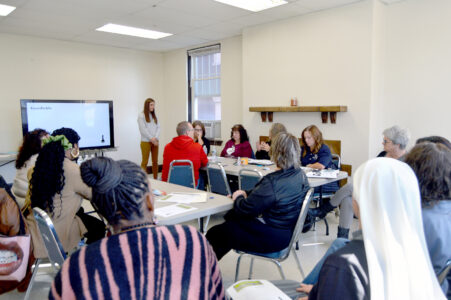
STEUBENVILLE -- Representatives from more than 10 organizations from Ohio and West Virginia connected Thursday to address the local issue of homelessness during the quarterly meeting of the Coalition on Housing and Homelessness of Jefferson and Harrison Counties.
From health and legal services to resource networks, the more than 20-year-old coalition pooled together individuals and organizations with an interest in housing and homelessness to discuss challenges in homelessness services and ways to overcome them.
The Rev. Ashley Steele, executive director of Urban Mission Ministries, directed the meeting, which addressed upcoming events and offered time for open discussion.
"The purpose of the coalition is to be interacting with each other," Steele said. "It's nice to see everybody and realize that there are so many people committed to housing and homelessness and working together for a solution."
Steele added later, "When we're all together, you feel like this is what we should be doing."
The coalition, Steele said, is aligned with the Continuum of Care, a program designed for the prevention of and eventual ending of homelessness. Steele displayed graphics displaying care paths and appropriate services intended to bring individuals from homelessness to the desired end goal of market home ownership.
Steele invited members of the coalition to explain "prioritization," or "who gets to move into certain housing situations."
Teresa Lamp of Coleman Health Services said each homeless individual is entered into HUD's Homeless Management Information System if he or she has gone to a shelter.
"For lack of a better word, everyone is scored," Lamp said. "They're assessed to see how long they've been homeless, what their risk factors are. And then their score puts them with what resource is available to them."
Steele said that approaching winter weather may result in shelter's seeing increased usage. Ways to handle that include diversion, rapid rehousing, emergency shelter and overflow shelters, Steele listed.
Diversion, Steele said, is the most preferable, and involves connecting individuals who are homeless or "in fear of being homeless" with needed resources, such as the Jefferson County Community Action Council, before they need to go to a shelter. The Urban Mission has the potential to create overflow housing, Steele said, but it is limited by its ability to staff the locations 24/7.
Lamp said further that simply having lived in a shelter does not automatically make an individual qualify for certain programs. Also, if a program is full, another person or family cannot be added unless someone else drops it, and some people can hit a roadblock if they lack necessary personal documentation or have a felony on their record.
A timely piece of discussion during the meeting was the Point in Time Count 2024, an annual survey taken on the amount and qualities of a community's homeless population, sheltered and unsheltered, on a single night in January. The count is required by the Department of Housing and Urban Development and largely determines funding for homeless services in individual counties.
Steele noted that an online seminar will be held from 10 a.m. to 11 a.m. Wednesday to discuss the upcoming count. The seminar is intended for "those who will be leading the effort," but anyone can listen in.
Also upcoming is the Ohio Housing Conference in Columbus from Nov. 28-29. The conference is a networking and education opportunity that Steele said will "bring all housing minds together."
Other updates included the Consolidated Annual Performance Evaluation Report, which is requested by Steubenville's Planning and Zoning Commission. The report collects statistics on housing and contributes to the city's consolidated plans.
Melody McClurg, executive director of the Jefferson Metropolitan Housing Authority, gave an update on the Steubenville North Choice Neighborhoods project, which is in its planning stages and seeks to be awarded between $30 and $50 million in grant funds from HUD to redevelop JMHA's 206 units of low-income housing in Steubenville's John F. Kennedy Apartments and Elmer White Family Units into mixed-income developments.
Currently, McClurg said, the planning firm COLLABO is compiling results from a community workshop to see what Steubenville residents would like the redeveloped neighborhood to look like. An "early action project" for the Choice Neighborhoods planning team could include a bus stop by East Garfield Elementary School and feature colorfully painted asphalt.
In other business, Beth Rupert-Warren of the Jefferson County Resource Network expressed concern about the amount of homeless youth that are "couch surfing" from one location to another. Pamela Bolton of the Southeastern Ohio Legal Services added that she has seen couch-surfing youth be denied school enrollment, typically ensured by the McKinney-Vento Homeless Assistance Act.
Another popular topic of discussion was landlords who allegedly dislike renting to certain individuals for fear that the tenants will not take care of the homes. Cookie West of the Jefferson County Board of Developmental Disabilities suggested that there be some form of education for individuals to teach them how to care of and "take pride in the home."
"Transitional supportive housing would be great," added McClurg. She added that, if a tenant leaves a home while owing a large water bill, the bill is directed by default to the landlord -- another reason landlords might be hesitant to rent out their properties.
Later, discussions centered on possible collaborations with the Jefferson County Land Bank to bring to Steubenville some transitional housing, which is temporary housing that includes supportive services for those with special needs.
Other events of interest mentioned during the meeting include the Jefferson County Resource Network's Community Meeting at 10 a.m. on Dec. 8, which Rupert-Warren said will hopefully gather more than 100 people for open discussions on topics like public health and transportation.
The Urban Mission will be hosting a hunger and homelessness community conversation at 5:30 p.m. on Nov. 16 at the War Memorial Building at 423 North St. Also, it is hosting a holiday food drive until Nov. 21, items for which can be dropped off at the Urban Mission Warehouse at 311 North 6th Street.
Steele said the coalition's meetings are open to the public, for anyone who wants to learn more about homelessness or "join hands" with those seeking to end it.