
Seeing America from the California Zephyr
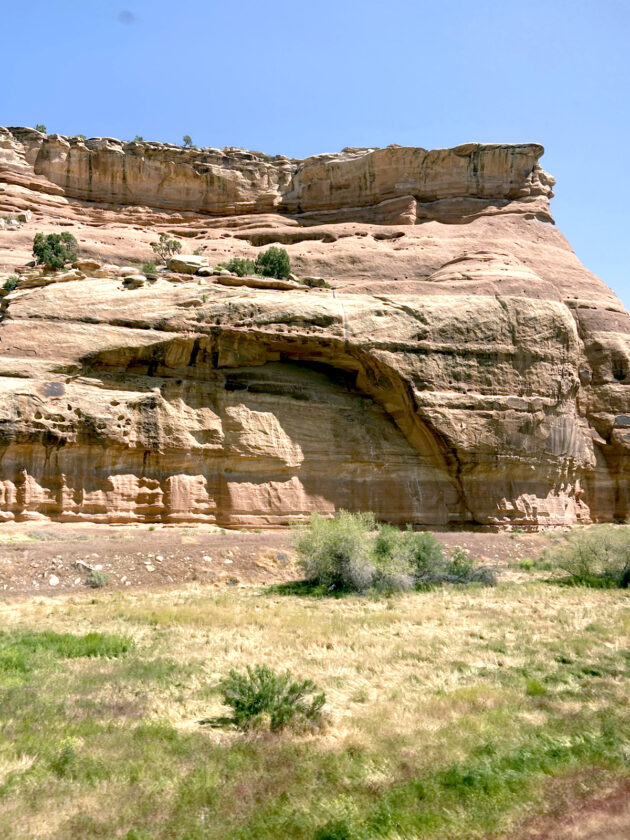
The railroad passes through five distinct different canyons, including Ruby Canyon of the Colorado-Utah border.
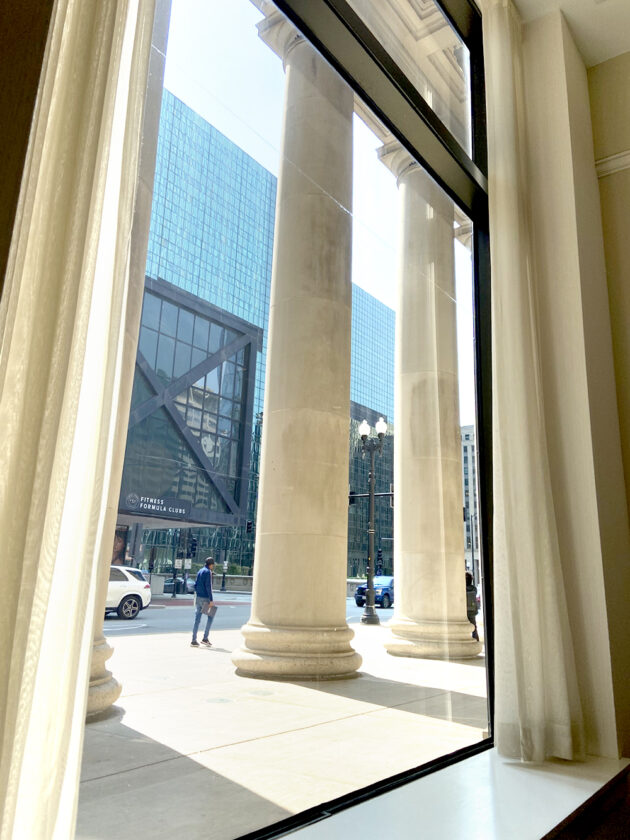
The 1925 Chicago Union Station, which is the fourth busiest Amtrak station, looking outside at Canal Street, was one of the stops Hall made on his trip west to the Pacific Ocean.
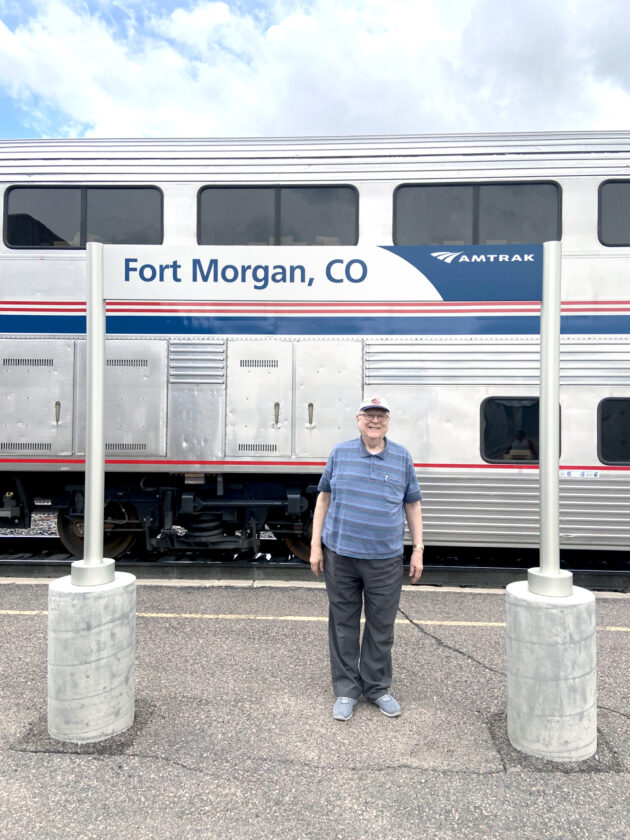
RIDING THE RAILS — Above, Hall’s train made a stop in Fort Morgan, Colo., in order for passengers to receive some fresh air because they had been riding all day. Bottom left, Leland Stanford Mansion in Sacramento was Hall’s favorite stop in his trip. This area was home to Stanford, an early governor of California and owner of the Central Pacific Railroad. Bottom right, the railroad passes through five distinct different canyons, including Ruby Canyon of the Colorado-Utah border. -- Contributed
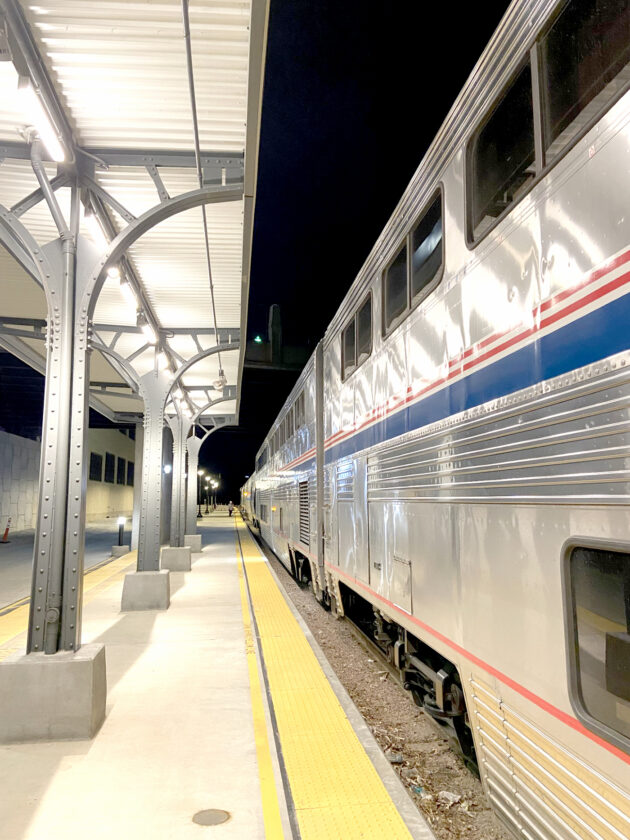
Hall took another photo of the train platform at Omaha, Nebraska during at a near-midnight stop on the California Zephyr — his favorite line.
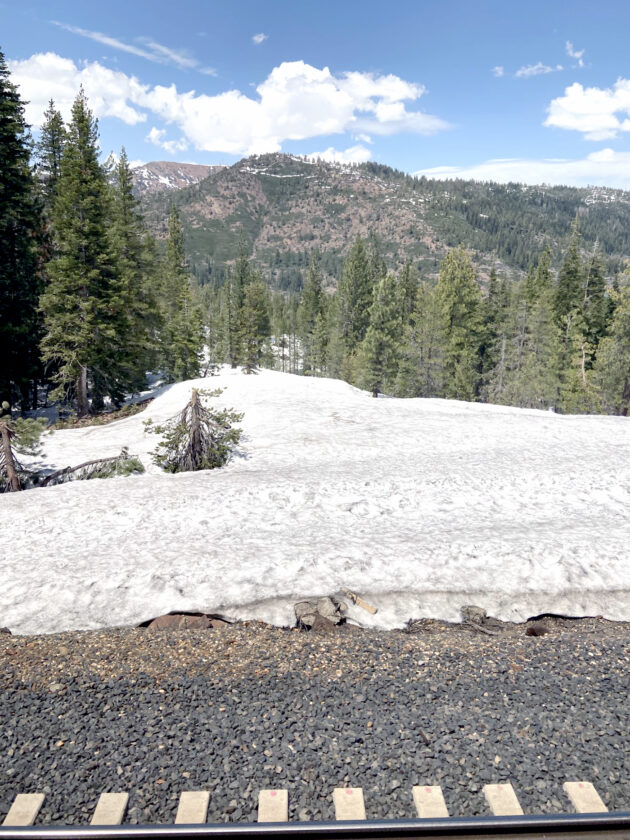
Snow could be found all along the tracks in the Sierra Mountains of California when Hall entered the area in almost complete darkness.
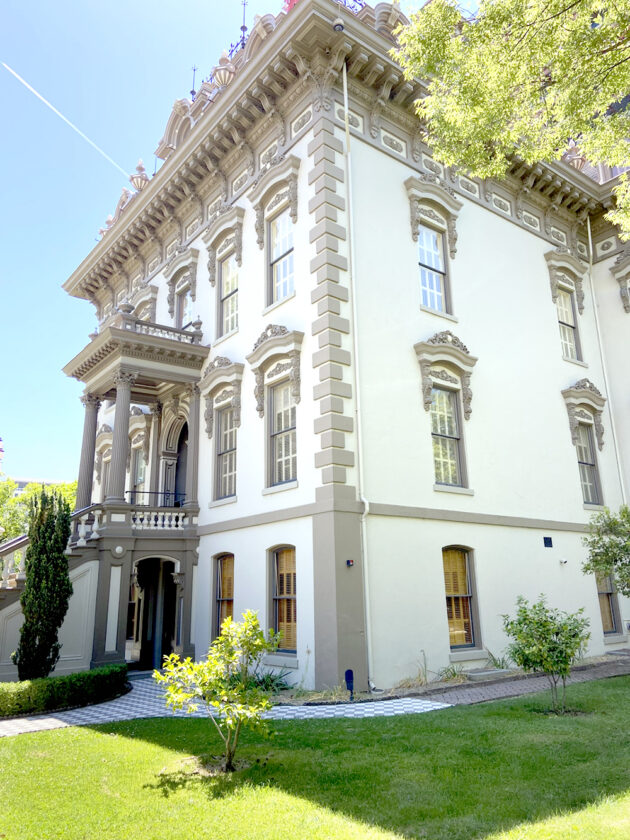
Leland Stanford Mansion in Sacramento was Hall’s favorite stop in his trip. This area was home to Stanford, an early governor of California and owner of the Central Pacific Railroad.
The railroad passes through five distinct different canyons, including Ruby Canyon of the Colorado-Utah border.
The 1925 Chicago Union Station, which is the fourth busiest Amtrak station, looking outside at Canal Street, was one of the stops Hall made on his trip west to the Pacific Ocean.
RIDING THE RAILS — Above, Hall’s train made a stop in Fort Morgan, Colo., in order for passengers to receive some fresh air because they had been riding all day. Bottom left, Leland Stanford Mansion in Sacramento was Hall’s favorite stop in his trip. This area was home to Stanford, an early governor of California and owner of the Central Pacific Railroad. Bottom right, the railroad passes through five distinct different canyons, including Ruby Canyon of the Colorado-Utah border. -- Contributed
Hall took another photo of the train platform at Omaha, Nebraska during at a near-midnight stop on the California Zephyr — his favorite line.
Snow could be found all along the tracks in the Sierra Mountains of California when Hall entered the area in almost complete darkness.
Leland Stanford Mansion in Sacramento was Hall’s favorite stop in his trip. This area was home to Stanford, an early governor of California and owner of the Central Pacific Railroad.
Trending
For the past 30 years, I have traveled by train from time to time, using Amtrak, which is officially the National Railroad Passenger Corp., formed in 1971 as private railroads were eliminating passenger service.
After retirement, my plan was to take a train trip once-a-year, but COVID ended that. I had been using "America by Rail" for three trips, joining a group travel plan to use rail and bus to visit various locations, but COVID caused them to go out of business. So, six months before May, I used Uniglobe Travel of Wheeling to book a train trip just for me on my favorite line -- the California Zephyr -- west from Chicago to the Pacific Ocean.
Amtrak reservations fill quickly these days and within two months my May 15 departure was literally sold out, so glad I acted quickly.
My trip began in Pittsburgh's Penn Station with the usual 11:59 p.m. departure west on the Capitol Limited, named by Amtrak for the B&O Railroad's 1925 train. At times people show up at the station confused by the 11:59 p.m. departure and which day that is, but the crowd this time was all correct. I was booked in a Roomette, the smaller sleeping compartment as I planned to be awake all night to see the sights westward to Chicago.
If you turn the lights out in the room, and open the curtains, the sights of Alliance, Cleveland, Sandusky and Toledo are all visible in the nighttime. The train was on time, arriving in the 1925 Chicago Union Station, now renovated to manage the fourth busiest Amtrak station. I always stay overnight in a downtown hotel and depart west the next day in case of some delay that would foul up my transfer; staying in the Metropolitan Lounge people-watching or roaming around the area taking in the sights of downtown Chicago.
The next day, I was ready of the 2 p.m. departure of the California Zephyr train operated by Amtrak since 1983, and three different railroads from 1949-1982, and was even given a Red Cap ride to the train since my gray hair gives away my age these days. I settled into the bedroom on the lower level of the train, at the end of the hallway, allowing me to move from side to side of the Superliner rail cars to see the best sights out either window.
By the time of the fresh air stop (formerly called smoke stops as there is no smoking allowed on the trains these days) at Galesburg, Ill., we were right on time. The same for Ottumwa, Iowa, and the near midnight stop at Omaha, Neb., when I overheard the conductor say to our sleeping car attendant, "now the fun begins with the detour." Re-boarding the train, I asked if breakfast in the diner would be Mountain Time, as I re-set my watch so as not to miss a meal in the diner, which are included in the ticket price of a sleeper. Derek said yes, 6:30 a.m to 9:30 a.m. Mountain Time, but with the detour, they were not sure where we will be.
Turned out that flooding in southern Nebraska would cause us to use Union Pacific Railroad's northern line with a slower speed restriction. I had my schedule, route guide and railroad atlas with me (any good librarian would) so I followed the detour route through the darkness. At one point we stopped on a siding, and I stared into the inky blackness of the 2 a.m. sky at no lights until a freight train passed us on the main line. I was one of three at breakfast in the diner and as people emerged, they were frustrated at the seven-hour delay as we turned at the town of Alliance, Neb., to head back to the regular route. My thought was how wonderful to have seven more hours on a train, but I didn't share that with my fellow passengers.
Fort Morgan, Colo., was made a fresh air stop since we had been on the train much of the day, the town now famous for the HGTV makeover of the downtown. We were about 60 miles east of Denver, in the high plains region with the Rocky Mountains visible on the horizon. At Denver, we met grumbling people who had been sitting in the station all day waiting the late train, but I was hoping daylight would continue long enough to allow viewing of the front range of the Rockies, our next portion of the Zephyr trip.
Being May, daylight held on as he departed Denver and began the twisting, curving climb up the mountains and through the 22 tunnels to the 6.2 mile-long 1928 Moffat Tunnel under the continental divide. The rail line dates to the 1902 and passes through five distinct different canyons of Colorado as well as the headwaters of the Colorado River. Our stop at Glenwood Springs reminded me that someday I need to make this trip and stay here for several days.
Darkness descended on us, and I realized that with the lateness of our train, if my return trip was on schedule, I would be about to see everything in daylight. I didn't share my enthusiasm with other passengers who were using Amtrak for transportation.
The dining car is a highlight of train travel, as community seating allows you to meet and greet with various passengers. I met folks from Finland and the United Kingdom (not England or Great Britain as they pointed out), various parts of the U.S. and a couple from Australia. She noted that she was a librarian, and I told her, "Me, too!" It turned out we are both online catalogers and use the Library of Congress cataloging and OCLC, too. At this point, her husband groaned and left the dining car as we exchanged the different aspects of our cataloging.
After the metropolitan areas of Provo and Salt Lake City passed, we emerged into desert and the salt flats of Utah and Nevada. We stopped around Wendover, Nev., when one of the wires along the tracks where there could be rock slides detected that a rock had tripped the sensor, so the engineer and conductor got out and found it to be a small rock which they could roll off the tracks and we could continue onward.
In Nevada, maintenance work was ongoing to replace rails and ties, so we were slowed considerably. I could estimate our arrival into Sacramento, my destination, would be 10 hours late, so I decided to enjoy the deserts of Nevada. Oh mercy, I could see why my ancestors stayed in Ohio rather than travel across these lands in the 19th century.
Arriving into Reno, the tracks are in a trench below street level and we were warned not to run upstairs and make a bet in one of the casinos as the train would leave without us. We entered Californiaat Truckee and into the Sierra Mountains, which were in darkness.
We arrived at Sacramento at 1:15 am, 10 hours late. The station remained open for passengers, I walked across the street and into my hotel where the desk clerk said, "Mr. Hall I presume!" Yes, sorry I am late, and she pointed out that I put on my reservation that I was arriving by train, so they assumed I would be late; but 1:15 a.m.?
I spent four days in Sacramento, as Old Town Sacramento was right next to the hotel, and the capitol city sites were the opposite direction. The Old Town is a recreation of the early city from 1850-1880 as well as the home of the California Railroad Museum.
My favorite visit was to the Leland Stanford Mansion. Constructed in four phases from 1856-1878, it was the home of Stanford, an early governor of California and owner of the Central Pacific Railroad. His widow left the mansion in 1900 to the Roman Catholic Diocese of Sacramento and it served as home to a group of nuns as well as an orphanage until purchased by the state of California in 1978 and restored and opened to the public in 2005. Photos taken in 1868 allowed restoration to the time period of the Stanford family, as the furnishings had been stored on the fourth floor for a century. They also were the founders of Stanford University in Palo Alto.
On May 23, I checked out of the hotel and returned to Sacramento station for the 11:09 a.m. departure of the Zephyr eastbound. Yes, on my return trip I saw everything that had been in the dark going westward. The Sierra Mountains of California were spectacular with three-to-four feet of snow still showing along the rails. The conductor stated that "we hope it slowly melts to fill the reservoirs of needed capacity."
The canyons of Utah and Colorado were during daylight hours, and they appeared that the old TV Westerns may have been filmed here. Descending into Denver gave a wonderful view of the mile-high city below us. The route through Nebraska had reopened with the rail bed restored and we joined the Chicago raceway of three tracks through the suburbs and back to Chicago Union Station,
My return hotel was different due to a large event in Grant Park, so I stayed on the north side of the Loop. At breakfast, I enjoyed the enormous windows looking at the Merchandise Mart and Chicago River, as well as an odd pair of round skyscrapers. I inquired of the waiter what those buildings are, and why do they look familiar to me? He answered that they are "Marina City" and that "I must be older than 50!" The reason he stated was that they were in the opening credits to "The Bob Newhart Show" on TV in the 1970s and at least once a week, someone asks.
I left on the Capitol Limited the next evening heading back to Pittsburgh. We passed through South Bend in daylight and I got to see the former Studebaker Motors office building and auto construction building, now restored to offices and computer businesses. Studebaker closed in 1966 and the complex had been vacant since.
I returned to Pittsburgh Penn Station early at 4:50 a.m., ready to plan next year's trip!