
Trending
WHEELING -- It was right around 11:40 p.m. on July 7 when Eddie Olczyk delivered his final signoff as a commentator for the NHL on NBC.
In the background, you could see members of the Tampa Bay Lightning still on the ice, passing the Stanley Cup among themselves and members of their families, just about 45 minutes removed from a 1-0 series-clinching win against Montreal.
Olczyk, who has made his living in hockey -- as a player, representing the United States in the Olympics and for 16 seasons in the National Hockey League; as a coach with the Pittsburgh Penguins; and as a commentator on radio and television broadcasts -- had just about finished wishing his colleagues well, those onsite in Tampa and those in the broadcast center in Stamford, Conn., when he paused before offering a special thanks.
"This is our last game on NBC, and I would like to thank the entire family at NBC and all of the people behind the scenes," an emotional Olczyk said.
"The strength and support that they gave me when I was in my fight with Stage 3 colon cancer a couple of years ago will probably be the one memory that I always remember, from my teammates back in Stamford, my teammates here and our captain, Sam Flood. It helped me get through it, and that's something I will cherish, and I thank them all very much for that."
While proud of his success in hockey and as a thoroughbred handicapper and commentator, Olczyk, who will be lead commentator for Turner Sports when shared NHL coverage with ESPN begins there in the fall, takes his status as a cancer survivor seriously, and he has been more than willing to talk about the importance of screening for the disease.
He'll discuss all of those aspects of his life on Sept. 22 when he appears in the Steubenville High School auditorium as part of the Herald-Star Speaker Series, Presented by Eastern Gateway Community College. It's a message that should really hit home.
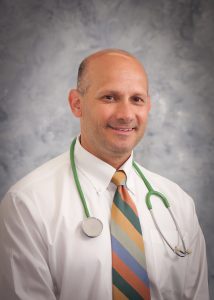
"I can tell you that screening for colorectal cancer is a nationally accepted and promoted form of reducing death that is associated with this disease," explained Dr. Jondavid Pollock, chair of the radiation and oncology division at WVU Medicine -- Wheeling Hospital. "Screening for this form of cancer was declared a huge success more than 10 years ago, based on an article in the New England Journal of Medicine that showed the screening test could save lives."
There are few tests in the screening arena that are as effective, added Pollock, whose hospital is among the sponsors for Olczyk's presentation.
"Prostate tests and mammograms all have been shown to reduce the severity of those diseases, but colorectal-screening colonoscopies are the bright light," he added.
Olczyk's cancer was not discovered until he was hospitalized after suffering symptoms of an intestinal blockage in August 2017. He endured surgery and several months of chemotherapy until being declared free of the disease in March 2018.
Since then, he's been advocating for people to be tested.
"I know the impact I've had on people by bringing awareness to cancer and, in particular, colon cancer," Olczyk writes in his biography "Beating the Odds in Hockey and In Life." "Mary Higgins, whose husband, Brian, is the director of team security for the (Chicago) Blackhawks, had a colonoscopy when I became sick and it was discovered she had Stage 3 colon cancer, similar to mine. What happened to her hit so close to home."
Having that colonoscopy was a timely decision.
"When Eddie recommended everyone get screened, my wife, Mary, got checked," Brian Higgins wrote in Olczyk's book, which was co-authored by Perry Lefko. "Eddie's lighting a fire under us may ultimately save her. She probably would have waited a little longer and then it could have become a disaster."
Everyone agrees that having a colonoscopy is important, but issues come along with it.
"The challenge we have with promoting this is that it is a very invasive procedure," Pollock said. "It's a big deal, and the preparation can be very off-putting to patients. You have to fast and take medication to purge your bowels."
That helps create a hesitancy to go through the procedure which, he added, helps to explain why screening rates in most states barely reach 50 percent. Pollock said there are programs working to change that, such as the one administered through the West Virginia Mountains of Hope coalition, which has a goal of reducing the human and economic impact of cancer across the state.
"One of the major improvements has been fecal DNA testing, which is the Cologuard home test," he explained. "It's a noninvasive method of testing. You go to the bathroom, send a stool sample in by mail and they conduct a series of tests that look for cancer DNA. Within two weeks, you get the results back, and if they are negative, the recommendation is to wait three years. If they are positive, then you need to have a colonoscopy."
While the test is for people who have low to average risk of colon cancer and no family history of the disease, the results are very good -- the home test has an accuracy rate of 90 percent in detecting cancer, while a colonoscopy has an accuracy rate of 95 percent, Pollock added.
Doctors and hospitals can expect to see rising numbers of colonoscopies in the future, Pollock said, because the recommended base age for testing has been lowered to 45 from 50. That makes sense, he added, because 11 percent of the people who develop colon cancer are younger than 50.
Lowering that age means millions of additional people will be looking to schedule a colonoscopy, which, Pollock said, could put more stress on the medical system. He said that about 50 percent of the procedures done in operating rooms now are colonoscopies, and added that home tests like Cologuard likely will offer a good alternative to relieve some of that pressure.
If cancer is detected, Pollock said treatments -- including surgery, targeted therapies and radiation -- produce very good cure rates. There can be side effects, though, including problems with toxicity.
Any help in getting that message about the importance of testing out to people is appreciated.
"I hope that somebody hears my story and has gotten checked because they weren't feeling good," Olczyk writes in his book.
Olczyk's presentation will begin at 7:30 p.m. General admission tickets cost $25 and are available at the Herald-Star office, 401 Herald Square, Steubenville, and at the Times Leader, 200 S. Fourth St., in Martins Ferry, during regular business hours. Tickets also are available at heraldstaronline.com and weirtondailytimesonline.com.
A preferred ticket package is available for $50. It includes a copy of "Beating the Odds" and the opportunity to be among the first people to meet Olczyk after the presentation.
A VIP package is available, and includes admission to a private reception that will be held from 5 p.m. to 6:30 p.m. at Froehlich's Classic Corner; a selection of beer, wine and hors d'oeuvres; the opportunity to meet Olczyk and have a photo taken with him; a copy of the book "Beating the Odds;" transportation from Froehlich's to the high school; and preferred seating for the presentation. The price is $150 for a couple and $85 for a single ticket.
For information about tickets and the availability of preferred and VIP packages, contact Diana Brown at the Herald-Star at (740) 283-4711.
Copies of Olczyk's book are available for purchase at the Herald-Star. Contact Brown for details. A portion of the proceeds from the sale of the book as well as money generated from a basket auction prior to the presentation will go to local cancer centers.
Area high school and junior high school students will have the opportunity to attend the presentation at no charge, courtesy of the Wheeling Nailers.
Joining the Herald-Star, Weirton Daily Times, Eastern Gateway Community College, WVU Medicine -- Wheeling Hospital and the Nailers as sponsors for the event are the Franciscan University of Steubenville, WesBanco, Dan Stephens State Farm, the Jefferson County Chamber of Commerce and WTRF-TV. Special support is being provided by Froehlich's Classic Corner, EM-Media, Steel Valley Regional Transit Authority and Steubenville High School.