
WVDOH seeks Route 2 comments
Trending
NEW CUMBERLAND -- Carrying approximately 7,000 vehicles each day through New Cumberland, the layout of state Route 2 has been presenting some difficulty during the last several years, in particular because of two 90-degree turns and a nearby railroad crossing in the city's downtown.
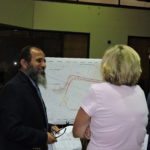
Representatives of the West Virginia Division of Highways were on hand Wednesday at the John D. Rockefeller Career Center to meet with residents and take comments on five proposed alternatives geared toward providing a better flow of traffic in the city.
Dirar Ahmad of the DOH engineering department, explained the workshop was another step in the years'-long process for the project, which has involved studies and public comment periods.
"This is important to us," Ahmad said. "It's a vital project."
Taking previous comments from residents, Ahmad said the DOH has created five alternatives. Four of those alternatives would make adjustments to the intersection at Madison and Chester streets.
The five options include:
-- Alternative 1: Improving the 90-degree turns by widening the existing alignment, including intersection improvements at Madison and Chester streets.
-- Alternative 2: Improving the 90-degree turns by shifting the road between them approximately 70 feet south, which also would improve the Madison and Chester intersection
-- Alternative 3: Similar to Alternative 1, but improving the inside radius at the intersection instead of creating a skewed intersection and widening
-- Alternative 4: Improving the existing turns by creating a short bypass of the existing road beginning near Hardin Run, going parallel to the railroad tracks and ending on Ridge Avenue near the library
-- Alternative 5: Creating a new routing for Route 2 through New Cumberland, beginning at the intersection of Chestnut and Madison and running closer to the Ohio River than the current Route 2, generally following South Chestnut Street, Pottery Road and Industrial Park Road to Ridge Avenue.
Ahmad explained cost can be a factor, with alternatives ranging in price from $3 million to $17 million, and the option of taking no action still is a possibility.
In addition to Wednesday's meeting, written comments also will be accepted until Aug. 14. Comments can be sent through the DOH website at http://go.wv.gov/dotcomment, or by e-mail to Sondra.L.Mullins@wv.gov.
Comments may be sent by regular mail to: RJ Scites, P.E.; Director, Engineering Division; West Virginia Department of Transportation, 1334 Smith St., Charleston, WV 25301.
Mayor Richard Blackwell acknowledged some action is needed, noting he has seen copies of studies going back at least 40 years addressing the intersection.
"I'm glad to see they're talking about doing something," he said, adding, though, he was uncertain if any of the proposed alternatives would completely take care of the concerns.
Blackwell said he would like to look into improving accessibility for pedestrians in the city, explaining travel between downtown and the ridge also is problematic.
Del. Mark Zatezalo, R-Hancock, was on hand Wednesday, saying he would like to see whatever option is considered safest and providing the best traffic flow selected.
Zatezalo noted recent action by the Legislature to provide funding for road projects, saying he expects to see some of that revenue used in the Northern Panhandle.
"We have worked with the governor to bring revenue for the roads," Zatezalo said, also adding economic development opportunities in Hancock County could depend on the project, as recent years have seen an increase in large truck traffic.
Ahmad explained, in addition to the Aug. 14 comment deadline, the tentative schedule includes an approval of the environmental assessment by the end of March, followed by another public hearing in early April with comments due by early May.
Final environmental clearance could come by the end of August 2018.