
Nurse served as volunteer at Standing Rock
Trending
News in recent days that the construction of the final segment of the stalled Dakota Access pipeline in North Dakota has begun is likely of interest to former area resident Amy Allan, who lives in Laguna Beach, Calif.
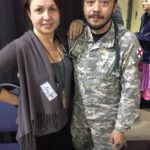
A registered nurse, Allan organized the collection of supplies where she lives and also traveled to Cannon Ball, N.D., as part of an entourage to spend several days there in early January, volunteering her time as a health professional with the medical team presence organized as part of the overall Veterans for Standing Rock movement.
It was an initiative, she explained, in which more than 2,000 veterans from across the country headed to Standing Rock to "peacefully stand in solidarity" with the Standing Rock Sioux and Cheyenne River Sioux tribes, both of whom argue that the pipeline threatens their water supply and cultural sites.
According to a recent Associated Press report, the Cheyenne River reservation in South Dakota borders the Standing Rock reservation, which straddles the North Dakota-South Dakota border. The last piece of the 1,200-mile pipeline would pass under the lake on the Missouri River, which marks the eastern border of both reservations. A separate court battle unfolded between the developer, Energy Transfer Partners, and the Army Corps of Engineers, which oversees the federal land where the last segment is now being laid. President Donald Trump last month instructed the Corps to advance pipeline construction.
Near that last segment is where an encampment of protestors has been in place for months and is not far from the Standing Rock Sioux reservation.
Allan, the daughter of Mary Beth Allan of Wintersville and the late Clifford Allan, headed to that encampment where thousands have had a presence in what she described as a community all in itself.
Allan is a 1993 graduate of Wintersville High School, the year for its last graduating class. She earned a business degree in 1997 from Eastern Gateway Community College and graduated in 2009 from Trinity School of Nursing. She has lived in California for five years, where she works as a registry RN.
In a recent phone interview, Allan said standing up for others' rights or volunteering weren't her habit, but a change of heart and attitude occurred as she read ongoing news and researched what was happening with the overall more than $3 billion pipeline project and the tribal opposition to it.
"As the events were unfolding and gaining attention at Standing Rock, I guess you could say it sparked a fire of sorts inside of me. I spent many hours reading articles, watching video clips and researching from a variety of sources. Then I started researching what I could do to help," she noted.
"At first I ended up organizing a food and supply drive for the tribes and volunteers there. The response from my community was amazing. I had gathered a whole truckload of food, warm clothes, camping gear, blankets, first aid supplies, water, etc.," Allan continued. "It was through those efforts that I became aware of a movement that was being organized by Wes Clark Jr."
Allan explained that Clark, an activist and son of retired Army Gen. Wesley Clark Sr., was organizing the movement called Veterans for Standing Rock, to recruit more than 2,000 veterans from across the United States to travel to Standing Rock "to peacefully stand in solidarity with the tribes and water protectors that were already there."
Allan said she became interested in how she could help and what she could do volunteering as a registered nurse.
"The next thing I know I was accepted as part of the medical team," Allan said. The supplies she had collected included three yurt tents which, along with other items, were picked up several days before she left on the outing that involved lengthy bus travel with the overall group.
Allan said she was one of about a hundred medical personnel who where there to lend medical assistance in an environment of harshening weather conditions combining snow and falling temperatures. There were two medical tents, according to Allan, who said people were treated for everything from falls on the ice and contusions to attention for pre-existing conditions such as COPD. She said it was a setting akin to "a fulling functioning urgent care."
Allan said her presence was at the time when the environment turned "incredibly celebratory" after word that the easement to move the project forward was being denied without further review. That mood shifted, however, when she said drilling continued regardless.
"It was a lot of emotion to go from 'we won' to 'it's still happening,' and not only that, at that time the weather had dropped about 20 more degrees and a snow storm there elevated to blizzard conditions," Allan observed.
The change in weather prompted an emergency response, according to Allan, with charter buses transporting some of the camp residents off the premises to a building where they could escape the harsh elements. Allan said at one time there were more than 400 people in the auditorium-like setting where she was one of five medical people on hand to provide any care needed.
The overall experience, Allan said, is one she was glad she got involved in. She said she went there to gain more awareness of the project, to learn about what was happening and hopes to continue involvement with Veterans for Standing Rock.